/ Feb 10, 2026
Trending
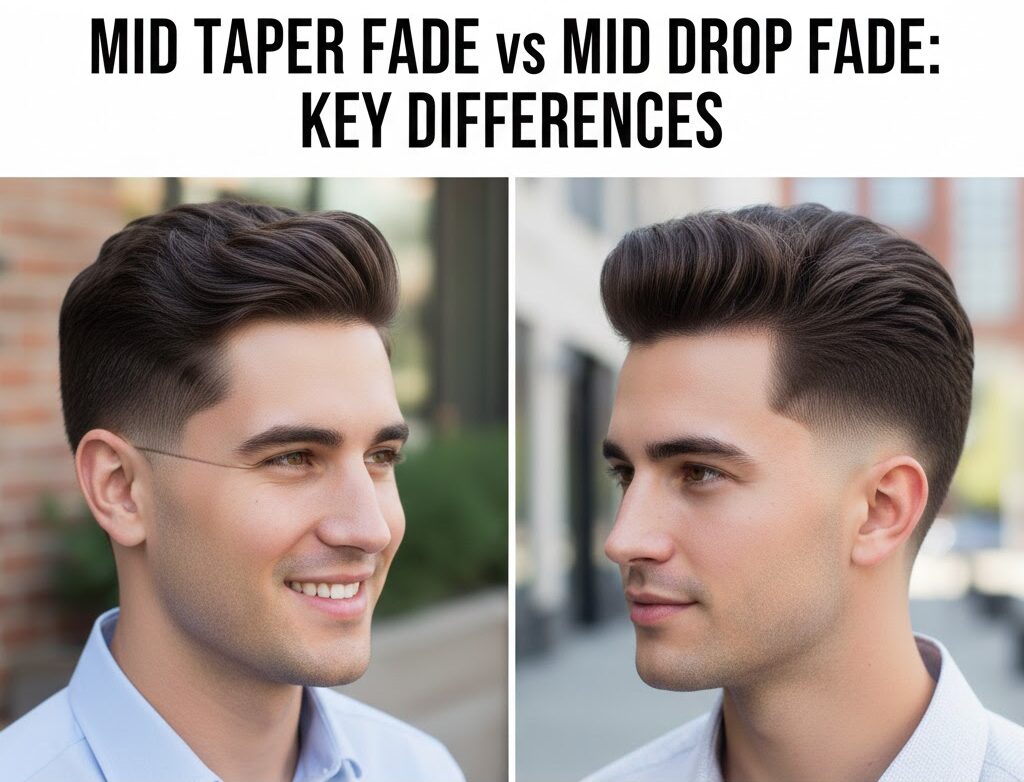
When it comes to modern men’s haircuts, few styles have gained as much popularity and versatility as the fade. Among the various fade options available, two particular styles stand out: the mid taper fade and the mid drop fade. While both are incredibly popular in barbershops worldwide, many men find themselves confused about which one suits their hair type, face shape, and personal style. Understanding the differences between these two cuts is essential before you sit down in the barber’s chair.
In this comprehensive 2025 barber guide, we’ll explore what makes the mid taper fade and mid drop fade unique, how they differ, and which one might be the perfect match for you. Whether you’re a first-timer or someone looking to switch up your regular cut, this guide will equip you with the knowledge to make an informed decision.
A mid taper fade is a modern haircut that combines two key elements: a taper and a fade. Understanding these components helps you grasp what makes this style distinctive.
The mid taper fade features a gradual transition of hair length that begins from mid-scalp and gradually decreases toward the sides and back. Here’s what you need to know:
Gradual Length Transition
Unlike abrupt cuts, the mid taper fade offers a smooth, gradual reduction in hair length. The fade starts around the middle of your head and progresses downward, creating a seamless blend from longer hair on top to shorter hair on the sides.
Blended Sides
The sides in a mid taper fade are cut with precision using various clipper guards. The transition is subtle and professional-looking, making it suitable for both casual and formal settings. Most barbers use multiple guard sizes to create this smooth gradient effect.
Versatile Styling Options
One of the best features of a mid taper fade is its versatility. You can style the top in numerous ways—slicked back, textured, curly, or even longer for a more casual look. The mid taper fade works with straight hair, wavy hair, and curly hair, making it universally adaptable.
Professional Appearance
The mid taper fade projects a polished, put-together aesthetic. It’s popular among professionals, athletes, and anyone who wants a sharp, well-maintained appearance without appearing overly trendy.

While similar in concept, the mid drop fade has distinct characteristics that set it apart. Let’s break down what makes this style unique.
The mid drop fade is distinguished by a more pronounced drop in the fade line, creating a different visual effect than the mid taper fade.
The Drop Element
The defining feature of a mid drop fade is the “drop”—the fade line curves down around the back of the head and behind the ears. This creates a more curved, flowing line rather than the straight-line transition you see in traditional fades. The drop gives the haircut a contemporary, fashion-forward appearance.
More Dramatic Contrast
A mid drop fade typically features stronger contrast between the top and sides compared to a mid taper fade. While the mid taper fade emphasizes gradual blending, the mid drop fade showcases a more defined separation, making the longer hair on top stand out more prominently.
Modern Aesthetic
The mid drop fade appeals to men seeking a cutting-edge, trendy look. It’s particularly popular among younger demographics and fashion-conscious individuals. The curved fade line creates visual interest and movement that’s simply not present in other fade styles.
Dynamic Top Styling
The mid drop fade provides excellent contrast for textured tops, messy styles, and voluminous hair. The dramatic fade underneath makes whatever you do with the top hair look more intentional and stylish.

Now that we’ve explored each style individually, let’s compare them directly to help you understand which might suit you better.
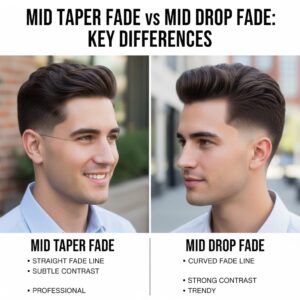
The most obvious difference between mid taper fade and mid drop fade lies in the fade line shape. The mid taper fade features a relatively straight fade line that runs horizontally around the head. The mid drop fade, conversely, features a curved line that “drops” down around the ears and back of the head, creating a more dramatic, curved appearance.
The mid taper fade emphasizes gradual blending and a more subtle contrast between lengths. The mid drop fade creates stronger, more defined contrast between the longer top and shorter sides. If you prefer a softer, more blended look, the mid taper fade is your answer. If you want maximum impact and definition, choose the mid drop fade.
While both styles are professional, the mid taper fade leans slightly more conservative and corporate-friendly. The mid drop fade has a more fashion-forward, trendy vibe that appeals to those wanting to make a style statement.
The mid taper fade accommodates a wider range of styling options, from sleek and professional to casual and textured. The mid drop fade particularly shines with textured, voluminous, and messy styling at the top.
The mid taper fade works beautifully with all hair types—straight, wavy, and curly. The mid drop fade particularly complements thicker, curlier hair types where the texture at the top creates striking contrast with the faded sides.
Both styles require regular maintenance every 3-4 weeks. However, the mid taper fade with its gradual blending may appear slightly less noticeable between appointments. The mid drop fade’s defined lines may require more frequent touch-ups to maintain the sharp appearance.
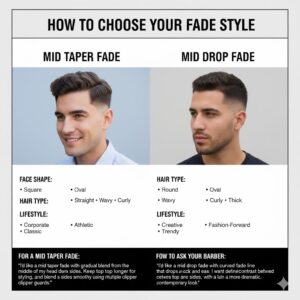
Round Face: The mid drop fade with its vertical lines can help elongate and define your features. The curved drop creates a slimming effect.
Square Face: Either style works, but the mid taper fade provides a balanced, professional look that complements strong jaw lines.
Oval Face: You’re lucky—both the mid taper fade and mid drop fade look excellent with oval faces. Choose based on personal preference.
Straight Hair: The mid taper fade shows off clean lines beautifully. The mid drop fade works too, but may require more styling product.
Wavy Hair: Both styles work equally well. The mid drop fade creates more dramatic texture contrast.
Curly Hair: The mid drop fade provides better contrast and looks more intentional with curly textures at the top.
Corporate/Professional Settings: The mid taper fade projects established competence and polish.
Creative/Fashion-Forward: The mid drop fade better suits those wanting to express individuality and style consciousness.
Athletic/Active: Either works, though the mid taper fade’s slightly softer blend may look less severe during activity.
Ultimately, your choice depends on how you see yourself. Do you prefer subtle, classic elegance? Choose the mid taper fade. Do you want to make a style statement and showcase contemporary trends? The mid drop fade is your pick.
Effective communication with your barber ensures you get exactly what you want. Here’s how to ask for each style:
For a Mid Taper Fade: “I’d like a mid taper fade with a gradual blend from the middle of my head down the sides. Keep the top longer for styling, and blend the sides smoothly using multiple clipper guards.”
For a Mid Drop Fade: “I’d like a mid drop fade with a curved fade line that drops around the back and ears. I want defined contrast between the top and sides, with a more dramatic, contemporary look.”
Regardless of which style you choose, proper maintenance keeps your haircut looking fresh:
For more detailed information about modern barber techniques and haircut trends, explore professional barber resources on MasterBarberCourse, which provides comprehensive guides on contemporary cutting techniques.
Both the mid taper fade and mid drop fade represent excellent modern barbering choices, each with distinct advantages. The mid taper fade offers subtle elegance, professional versatility, and universal appeal. The mid drop fade delivers contemporary style, dramatic contrast, and fashion-forward aesthetics.
Your choice between the mid taper fade and mid drop fade should reflect your personal style, lifestyle, and preference for either classic sophistication or trendy fashion. Neither choice is wrong—it’s simply about finding what makes you feel confident and comfortable.
Visit a skilled barber who understands the nuances of both styles. Show them this guide if needed, and communicate clearly about your preferences. With the right cut and proper maintenance, you’ll have a sharp, well-groomed appearance that turns heads.
Whether you go with the mid taper fade for timeless appeal or the mid drop fade for contemporary style, you’re investing in a quality haircut that elevates your overall appearance and confidence.
Q: What’s the main difference between a mid taper fade and a mid drop fade?
A: The primary difference lies in the fade line. A mid taper fade features a straight, gradual transition from longer hair to shorter hair. A mid drop fade has a curved fade line that drops around the ears and back, creating a more dramatic, contemporary look.
Q: How often should I get a mid taper fade or mid drop fade?
A: Both styles should be maintained every 3-4 weeks. The fade lines become less defined over time as hair grows, so regular appointments keep your style sharp and intentional.
Q: Which fade style is better for thick, curly hair?
A: The mid drop fade typically complements thick, curly hair better due to the strong contrast between the textured top and defined faded sides. However, both work—it depends on personal preference.
Q: Can I switch between a mid taper fade and mid drop fade easily?
A: Yes, both styles start at similar lengths on top, making it easy to transition between them. Simply discuss the different fade line with your barber at your next appointment.
Q: Is the mid taper fade or mid drop fade better for professional settings?
A: The mid taper fade slightly edges out the mid drop fade for ultra-professional environments due to its subtle, traditional aesthetic. However, the mid drop fade is still professional and increasingly accepted in modern workplaces.
Q: How much does each fade cost?
A: Pricing varies by location and barber expertise, but both styles typically cost between $15-35. Specialty barbers may charge more, particularly for complex mid drop fade designs.
Q: Can I style both fades the same way?
A: While there’s overlap, the mid drop fade works particularly well with textured and voluminous styles. The mid taper fade offers more flexibility for professional, slicked-back looks and casual styles.
Q: Which fade is easier to maintain between appointments?
A: The mid taper fade with its gradual blending appears less noticeably grown-out between appointments. The mid drop fade’s defined lines may become less crisp as hair grows.
Q: Do I need special products for mid taper fade or mid drop fade?
A: Both benefit from quality styling products, though the mid drop fade may require slightly more product for definition. Choose products suited to your hair type rather than the specific fade style.
Q: Can women get a mid taper fade or mid drop fade?
A: Absolutely. Both fade styles work beautifully for women, particularly those with shorter hair or those seeking modern, sharp aesthetics. Discuss your preferences with your barber.