/ Oct 23, 2026
Trending
The term “old money style” has become increasingly popular in fashion circles, yet many people misunderstand what it truly means. It’s not about wearing the most expensive designer labels or flaunting logos. Instead, old money style represents a sophisticated approach to dressing that prioritizes quality, timelessness, and understated elegance. If you’ve ever wondered how generational wealth translates into a distinctive aesthetic, you’re about to discover the principles that define this coveted fashion philosophy.
Old money style is characterized by restraint, heritage, and an investment mindset. It’s the fashion language of those who have nothing to prove—people confident enough to wear muted colors, classic silhouettes, and well-made basics that have stood the test of time. In this comprehensive guide, we’ll explore what old money style truly is, why it matters, and most importantly, how you can master it regardless of your budget.
Old money style isn’t a trend that will fade next season. It’s a timeless approach to fashion grounded in decades—sometimes centuries—of refined taste and tradition. Unlike new money or fast fashion, old money style emphasizes quality over quantity and longevity over novelty.
Restraint and Minimalism
The first principle of old money style is knowing when to stop. Rather than layering multiple trendy pieces, old money dressing embraces minimalism. A perfectly fitted cashmere sweater, tailored trousers, and quality leather shoes become the foundation. This approach reduces visual noise and creates an air of effortless sophistication.
Investment in Quality
Old money style buyers don’t chase sales or impulsive purchases. They invest in pieces that will last decades. This means selecting natural fabrics like silk, wool, linen, and leather that improve with age. A classic trench coat or structured handbag becomes a family heirloom rather than a seasonal purchase.
Heritage and Timelessness
Old money style draws from established fashion houses and heritage brands known for consistency and quality. Think Ralph Lauren, Hermès, Burberry, and Brooks Brothers—brands that have remained relevant for generations without constantly reinventing themselves.
Neutral Color Palettes
Old money style relies heavily on neutral colors: cream, navy, black, camel, gray, and white. These shades create a cohesive wardrobe where pieces mix and match effortlessly. Occasional jewel tones or subtle patterns appear, but always in a controlled, sophisticated manner.
Proper Fit Over Trends
Perhaps the most critical aspect of old money style is perfect tailoring. A well-fitted garment in a classic cut will always look better than a trendy oversized piece. Investment in alterations ensures every item sits perfectly on your body.

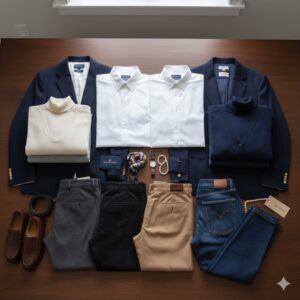
Every old money style wardrobe begins with foundational pieces that rarely change. These basics serve as the building blocks for countless outfits.
White Button-Down Shirt
The crisp white button-down is non-negotiable. Opt for quality cotton or a cotton-silk blend from brands like Brooks Brothers or J.Crew. This shirt works for professional settings, casual weekends, and can be dressed up or down infinitely.
Navy Blazer
A well-tailored navy blazer is perhaps the most versatile piece in old money style fashion. Wear it over basics for professional settings, throw it over casual wear for elevated weekend looks, or pair it with evening wear for sophisticated nights out.
Tailored Trousers
Invest in high-quality trousers in navy, black, camel, and gray. The fit should be precise—not too tight, not too loose. These serve as the foundation for countless outfits and work across seasons when styled appropriately.
Classic Jeans
Old money style embraces quality denim in dark washes. Look for structured, well-fitting jeans that maintain their shape. Avoid excessive distressing or trendy cuts; instead, choose timeless silhouettes that flatter your body.
Cashmere Sweaters
A collection of cashmere sweaters in neutral colors becomes your go-to layering pieces. Quality cashmere is an investment that pays dividends through comfort, longevity, and versatility.
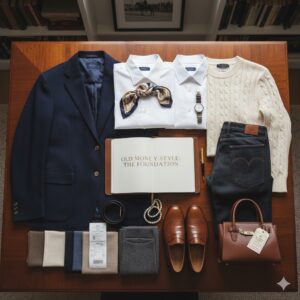
While old money style prioritizes basics, it’s not boring. Statement pieces add personality while maintaining sophistication.
Quality Handbags
A structured leather handbag in a classic shape is quintessential old money style. Think structured totes, elegant shoulder bags, or timeless crossbodies in neutral colors. Brands like Hermès, Coach, and Bottega Veneta offer pieces that appreciate in value over time.
Leather Accessories
Quality leather belts, shoes, and gloves elevate any outfit. The leather should be supple, well-finished, and in classic colors. These accessories often last a lifetime with proper care.
Silk Scarves
A silk scarf adds polish and personality to simple outfits. Choose classic prints or solid colors that coordinate with your existing wardrobe. Hermès and vintage scarves are particularly prized.
Jewelry and Watches
Old money style jewelry tends toward gold and silver in classic designs. Pearls, delicate chains, and understated pieces take precedence over statement jewelry. A quality watch becomes a functional accessory that completes any outfit.
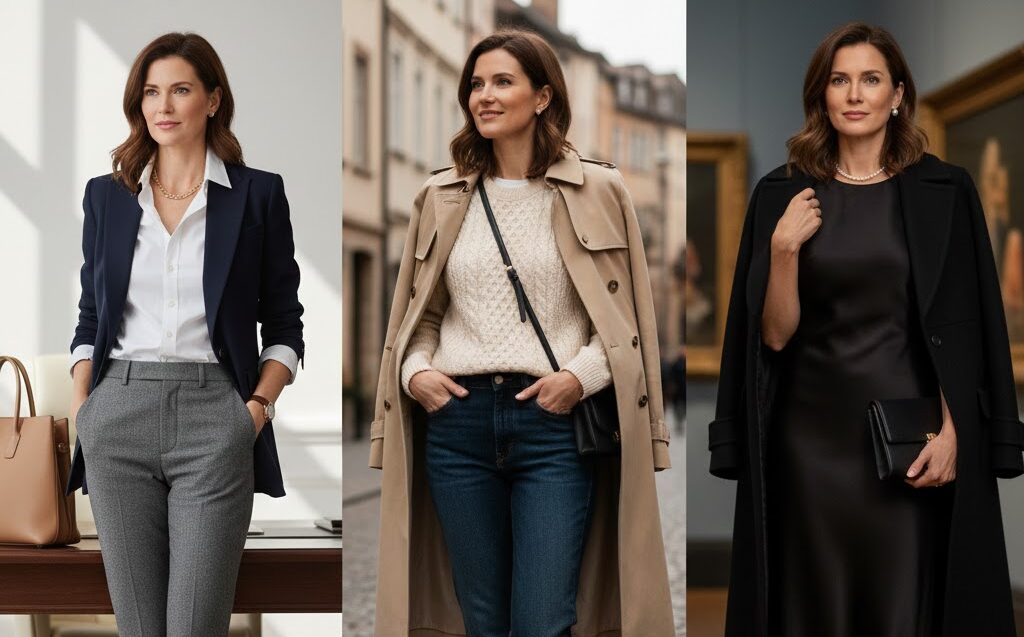
For work, old money style combines tailored pieces with quality basics. A classic combination might include a crisp white button-down, tailored navy trousers, a structured blazer, and quality leather loafers. Accessorize with a simple gold necklace and a leather watch for complete sophistication.
The key is looking intentional without appearing to try too hard. Your appearance should communicate competence and refinement.
Casual old money style doesn’t mean sloppy or lazy. Instead, it means elevated basics. High-quality dark jeans paired with a cashmere sweater and a structured blazer creates sophisticated casual wear. Add loafers or quality sneakers, and you’ve achieved effortless elegance.
Layering becomes essential in casual old money style. A lightweight sweater over a white t-shirt, finished with a structured coat, demonstrates intentional styling without appearing overdressed.
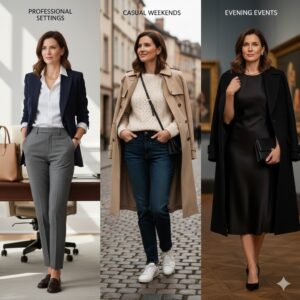
For evening, old money style embraces timeless elegance. A simple black dress in a quality fabric, paired with quality heels and minimal jewelry, never fails. A structured black coat or elegant shawl adds polish and sophistication.
The principle remains the same: let the quality of your pieces speak for itself rather than relying on trend-focused designs or excessive embellishment.
Mastering Old Money Style on Any Budget
A common misconception is that old money style requires unlimited spending. While quality pieces do cost more initially, they’re more economical long-term. Here’s how to build old money style smartly:
Prioritize items you’ll wear frequently and keep for years. A classic leather handbag or Quality blazer warrants investment. Basics you’ll wear constantly should be the highest quality you can afford.
Vintage shopping opens access to heritage brands at fraction of original prices. Many old money style pieces become more valuable with age. Platforms like Vestiaire Collective and The RealReal offer authenticated designer pieces at reduced price.
Old money style works because it communicates confidence and security. When you’re not trying to prove anything with your appearance, others perceive you as genuinely accomplished. This psychological component makes old money style about more than just clothing—it’s a mindset.
Adopting old money style means committing to quality over trends, investing in pieces that transcend seasons, and understanding that true elegance is understated. It’s a slower, more intentional approach to fashion that rewards patience and self-knowledge.
For deeper insights into luxury fashion philosophy and timeless dressing, explore resources like Vogue’s comprehensive guides on luxury fashion, which regularly features articles on building sophisticated wardrobes.
Key Takeaways for Mastering Old Money Style
Old money style represents a departure from the fast-fashion culture that dominates modern retail. It’s an investment in yourself and your wardrobe, built on principles of quality, timelessness, and refined taste. Whether you’re starting from scratch or refining your existing wardrobe, the principles of old money style guide you toward pieces you’ll treasure for decades.
The beauty of old money style is that it’s accessible to anyone willing to invest time and money thoughtfully. It’s not about wealth—it’s about wisdom. By prioritizing quality over quantity, choosing timeless pieces over trends, and mastering the art of sophisticated simplicity, you can develop a signature style that communicates elegance and confidence for years to come.
Start with the basics, invest strategically, and remember: true luxury is knowing when to stop. Old money style isn’t about having everything; it’s about having exactly what you need and nothing more.
Q: Does old money style mean I have to spend a lot of money?
A: Not necessarily. While quality pieces do cost more upfront, they last longer, making them more economical long-term. Additionally, vintage shopping and strategic investments allow you to build old money style on various budgets.
Q: What’s the difference between old money style and minimalism?
A: While both emphasize quality and restraint, old money style incorporates heritage, specific color palettes, and classic pieces from established brands. Minimalism is more about reducing possessions overall. Old money style is curated minimalism with intentional selections.
Q: Can younger people wear old money style?
A: Absolutely. Old money style isn’t age-specific—it’s an approach to dressing based on quality and timelessness. Young people who embrace these principles can develop sophisticated, enduring style.
Q: What brands embody old money style?
A: Heritage brands like Ralph Lauren, Hermès, Brooks Brothers, Burberry, J.Crew, and Loro Piana represent old money style. These brands prioritize quality, consistency, and timeless designs.
Q: How do I know if a piece fits the old money style aesthetic?
A: Ask yourself: Will I wear this in five years? Is it in a neutral color or classic pattern? Is it made from quality materials? Is the fit timeless? If you answer yes to these questions, it likely fits old money style principles.
Q: Can old money style include trends?
A: Old money style occasionally incorporates subtle trends, but only if they align with existing principles of quality and timelessness. Trends are adopted conservatively and in neutral colors.
Q: Is old money style only about clothing?
A: No. Old money style extends to accessories, grooming, homes, and overall lifestyle choices. It’s a comprehensive approach to living that prioritizes quality, heritage, and timelessness across all areas.
Q: How do I transition to old money style if I currently dress differently?
A: Start by identifying basic pieces you already own that fit the aesthetic. Then gradually build your wardrobe with quality essentials. Don’t rush—allow your style to evolve naturally over seasons.